November 12, 2026
Choosing the Right Height for a Garden Fence
By @practicalboundaries
What height should a domestic garden fence be?
A garden fence for a domestic property typically stands between 1.8 metres (six feet) and 2 metres (about six feet six inches). That range works well for most homes because it blocks sightlines from ground level while staying within common permitted development limits. A fence that is too low gives little privacy; one that is too high can cause neighbour disputes or run into planning rules. The right height depends on what you want the fence to do - keep the garden private, mark a boundary, or reduce wind - and on the layout of your property.
Why height matters for privacy
Privacy is the main reason people install a tall fence. If your garden is overlooked by neighbouring windows or a public footpath, a fence at eye level or above makes the space feel enclosed and personal. A 1.8-metre panel is tall enough to screen a seated person and most standing adults, especially when the fence is closeboard or has overlapping boards that leave no gaps. For extra screening, you can add trellis on top, but that counts towards the total height for planning purposes.
When you are planning privacy fencing installation, think about the ground levels first. If your garden sits higher than the neighbour's land, a 1.8-metre fence might appear lower from your side and much taller from theirs. That difference matters because the planning rules measure height from the ground on each side of the fence. A fence that is 2 metres on one side might be only 1.5 metres on the other, which changes what you are allowed to build without permission.
Planning rules and boundary agreements
In England and Wales, permitted development rights let you erect a fence up to 2 metres tall without planning permission, but only if it is not next to a highway or a footpath used by vehicles. If the fence borders a road, the maximum is 1 metre. These rules apply to the height measured from the ground on the lower side. Always check with your local authority before starting work, because some areas have extra restrictions, especially in conservation areas or on listed buildings.

Your neighbour's agreement is just as important as the planning rules. The boundary line between properties is often unclear, and a new fence can cause tension if it is higher than the old one or built in the wrong place. Before you install any fence, confirm the exact boundary line with your neighbour and discuss the height you plan to use. A written agreement saves trouble later. If the fence is on the boundary, both neighbours share responsibility for it. If it sits entirely inside your land, you can choose the height yourself, but it is still wise to talk to the neighbour first.
Practical factors that affect height
Wind is a real consideration. A tall solid fence acts like a sail, and in exposed locations the wind can push it over or break the panels. For windy gardens, a fence that is 1.8 metres high with some gaps between the boards lets air pass through while still giving privacy. Closeboard fencing with a small gap at the bottom or with a trellis top works well. The fence posts must be set deep enough and secured with postcrete to handle the extra load. If you live in a very windy area, a lower fence with dense planting behind it often lasts longer than a tall solid panel.
The garden's shape and size also guide the height. A long narrow garden feels even narrower with a very tall fence, because the walls close in on both sides. A lower fence, around 1.2 metres, can look more balanced while still giving some privacy. For a wide garden, a taller fence works fine because the space does not feel cramped. Think about how the fence will look from inside the house and from the garden itself. A fence that is too tall can block light and make a small garden feel dark and boxed in.
If you are considering garden fencing Derby, be aware that local ground conditions vary. Clay soil can shift with the seasons, so fence posts need to be set deep enough to stay upright. A 1.8-metre fence with concrete posts and gravel boards is a common choice here because it handles ground movement well. The extra height gives the privacy most homeowners want without going over the 2-metre limit. Talk to a local installer who knows the soil and the typical planning rules in your area.
Balancing privacy with light and neighbourliness
A fence that gives you privacy should not take away all the light from your garden or your neighbour's. A solid panel at 2 metres can cast a long shadow, especially in winter. If your garden faces north or is shaded by trees, a slightly lower fence with a trellis top lets light through while still screening the view. The trellis can be planted with climbers that add greenery and soften the fence line.

Neighbourly relations matter. A fence that is too high can feel aggressive, even if it is within the rules. A height of 1.8 metres is usually acceptable to most people because it gives privacy without looming over the garden. If your neighbour already has a fence of a certain height, matching it or staying close to it keeps the street scene consistent. When you are planning privacy fencing installation, think about how the fence will look from both sides. A finished appearance on both sides, using closeboard with a gravel board and a capping rail, looks professional and keeps the peace.
Gate height and access
The gate in the fence needs to match the fence height for a clean look. A gate that is lower than the fence looks odd, and one that is taller is hard to operate. Most standard gates come in heights that match common panel sizes, so a 1.8-metre fence works well with a 1.8-metre gate. The gate frame must be strong enough to carry the weight of the boards and the gate locks. A heavy gate on tall posts needs sturdy hinges and a catch that will not sag over time. Plan the gate position early, because the post spacing for a gate is different from the spacing for panels.
Alternatives to a tall fence
If a tall solid fence is not the right choice for your garden, there are other ways to get privacy. A lower fence with a hedge behind it gives a softer look and still blocks views once the hedge is established. Evergreen hedges like laurel or yew grow dense and stay green all year. The hedge can be planted on your side of the fence, so the fence itself can be lower, around 1.2 metres, while the total height of fence plus hedge reaches 2 metres or more. This approach takes time for the hedge to grow, but it ages well and adds wildlife value.
Another option is a fence with horizontal slats that have small gaps between them. These let some light through while still screening the view. The slats can be angled to block sightlines from certain directions. These fences are often lower than solid panels, around 1.5 to 1.8 metres, and they work well in modern garden designs. They also let wind pass through, which reduces the load on the posts.
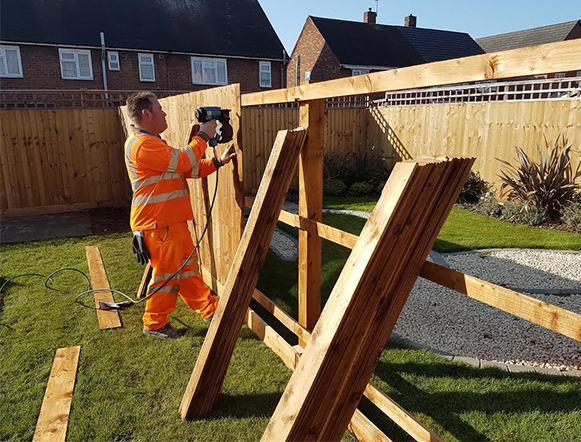
For gardens that need privacy only in one area, a single tall panel or a privacy screen placed strategically can be enough. You do not always need a full-height fence around the whole boundary. A section of closeboard fencing at the seating area or near the back door gives privacy where you use the garden most, while the rest of the boundary can be a lower fence or a hedge. This approach saves money and keeps the garden feeling open.
Key points to remember
- Most domestic garden fences are 1.8 to 2 metres high, measured from the lower side of the ground.
- Check local planning rules before you build, especially near a road or in a conservation area.
- Agree the boundary line and the fence height with your neighbour before starting work.
- For windy sites, choose a fence that lets some air through or set the posts deeper.
- If you are planning garden fencing Derby, get advice on soil conditions and local practice to make sure the fence stays upright for years.
Choosing the right height for your garden fence is a balance between privacy, light, planning rules and good neighbourly relations. A fence that is about 1.8 metres tall works for most homes, but your specific garden layout and local conditions may point to a different height. Think about what you need the fence to do, check the rules, and talk to your neighbour. That way you end up with a fence that gives you privacy without causing problems.
❧